Every offer on one page
Rent per acre and per year, in today's dollars and in nominal dollars, for every offer and every phase of the term.
Land Lease Review
A developer has sent a solar farm lease offer for your Kentucky land. We turn the rent schedule, option payments and decommissioning terms into numbers you can compare, then hand your attorney a clean list of questions.

A 40-year lease outlives most tractors and the next several farm bills. Read it like it will.
A solar farm lease offer in Kentucky usually arrives as a letter with one big number: rent per acre per year. That number matters, but it’s one line of a much longer commitment. We compare the commercial and financial terms of every offer you hold, over every year they cover, and organize the questions your attorney and tax adviser should answer before you sign anything. Wes Caudill, our Rural and Agricultural Advisor, leads this work.
Here’s an illustrative comparison, not a real offer. Offer A pays $1,000 per acre, flat. Offer B pays $850 per acre with a 2% annual escalator. Offer A looks better in the letter. But Offer B passes it in year 10, and over a 35-year operating term it pays about $42,500 per acre against Offer A’s $35,000.
Now add inflation. At 2.5% a year, Offer A’s $1,000 payment in year 35 buys what about $432 buys today. A flat rent is a falling rent, measured in what it buys.
An offer might pair a five-year option with a 30-year operating term and two five-year extensions. That’s up to 45 years of control over your ground, and only some of those years pay operating rent. We lay out every phase on one timeline. Then you can see what the land earns during the option years, while it may be hard to rent to anyone else.
Merchant generating facilities of 10 MW or more that sell power on the wholesale market need a construction certificate from the Kentucky State Board on Electric Generation and Transmission Siting. State law requires a setback of 2,000 feet from residential neighborhoods, schools, hospitals and nursing homes, unless the board grants a deviation. Where local planning and zoning exists, local setback and decommissioning requirements can take priority.
Kentucky law also requires these projects to file a decommissioning plan backed by a bond or similar security that names leasing landowners as co-beneficiaries, alongside the state Energy and Environment Cabinet. Amendments effective July 15, 2026, changed how that bond amount is calculated. We record the security terms each offer states. Your attorney can tell you how they relate to current law.
We compare numbers. We don’t interpret contract language, we don’t recommend signing, and we don’t give legal or tax advice. See how the numbers can play out in our Christian County poultry farm scenario, read our farmland lease terms guide, or learn more about how we work with Kentucky farms.
What you walk away with
Rent per acre and per year, in today's dollars and in nominal dollars, for every offer and every phase of the term.
Option, construction, operating and extension periods added up, with a note on who holds the right to extend.
Decommissioning security, crop-loss payments and property-tax reimbursement listed as the offer states them, with the gaps marked.
Your attorney receives an organized question list, so paid time goes to legal judgment instead of sorting paperwork.
How it works
7–10 business days from complete documents. You'll know the scope and the fee before any work begins.
A free 20-minute call to understand the offer, the land and who in the family needs to be part of the decision.
Offer letters, draft leases or option agreements, maps, and your current crop, livestock or cash-rent figures for the affected acres.
We convert every offer into the same units and years, model the rent over the full term and test it against inflation and your alternatives.
A written comparison with an assumptions page, the question list, and a recorded call that everyone involved can join.
Deliverables
Where our work stops
Part of our Solar Energy Consulting practice. Also in this practice: Solar Readiness Consultation.
FAQ
No. We never recommend signing or not signing. We show what each offer pays on its stated terms, how it compares with your alternatives, and which questions remain open. You decide with your family and your attorney.
Generating facilities of 10 MW or more that sell power on the wholesale market need a construction certificate from the Kentucky State Board on Electric Generation and Transmission Siting. Where a county or city has planning and zoning, local setback and decommissioning requirements can take priority. Your attorney can explain how that process applies to a specific project.
There's no single standard Kentucky solar lease. Terms vary by developer and by project. We compare the offer against the other offers you hold and against your own alternatives, not against a market average nobody can verify.
Possibly. Kentucky lets qualifying farmland be assessed at agricultural value through the county Property Valuation Administrator. How leased solar acres would be treated, and whether the offer reimburses any increase, are questions for your tax adviser and PVA. We put them on the list; we don't answer them.
Yes. Lease decisions often involve siblings, heirs or partners in different towns. The call is recorded, so anyone who misses it can watch later.
Related

Farms & Land
14 commercial terms to compare in a Kentucky solar farm lease offer, from rent and escalators to drainage tile and decommissioning, framed for your attorney.
Read more
Illustrative scenario
A poultry and grain family in Christian County holds a utility-scale lease offer for 180 acres and wonders about solar for its own barns. We compare the income streams and list the questions they took to their attorney and CPA.
Read more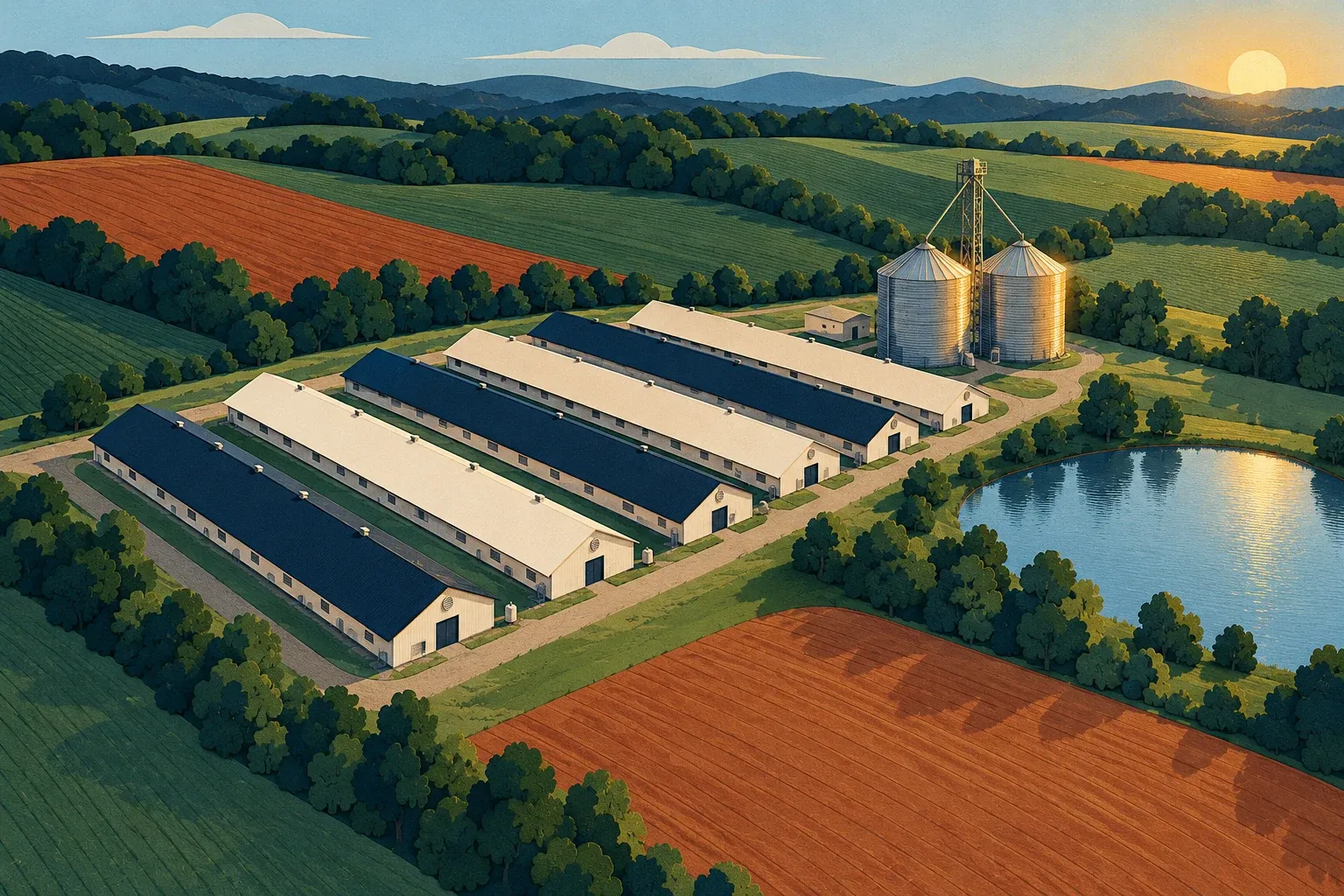
Who we serve
Independent help for Kentucky farm families weighing on-farm solar, comparing land lease offers, and sorting out co-op rules and 2026 program changes.
Read more
Service area
Independent solar analysis for western and south central Kentucky: TVA-served and Big Rivers co-ops, city utilities, poultry and grain farms, and lake homes.
Read moreNext step
Tell us what you are weighing. A free 20-minute fit call is enough to know whether we can help and what it would take.