Apples to apples
Every bid is restated on the same basis: price per watt DC, equipment tier, warranty terms, exclusions and payment schedule.
Procurement
A solar RFP and bid comparison that puts every proposal in the same crate: same scope, same warranty questions, same production assumptions. You choose from a scored table instead of a stack of brochures.

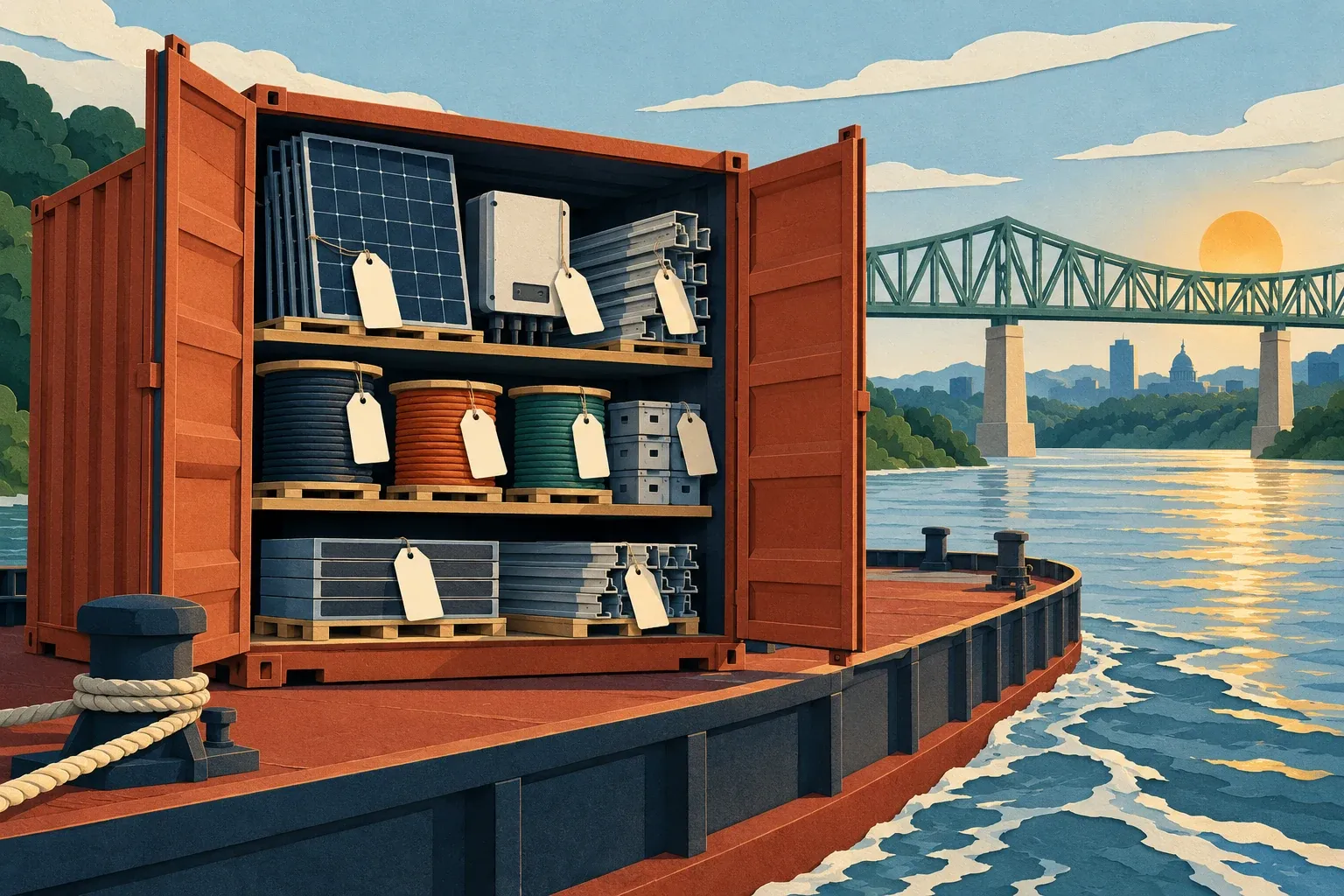
Most solar bids are apples and oranges. Leveling puts them in the same crate — same scope, same warranties, same assumptions.
Ask three installers for a quote and you’ll get three different documents. One prices a larger system with premium modules. One leaves out the main-panel upgrade. One assumes your roof will produce 8% more than the others think it will. None of them is wrong, exactly. They just aren’t answering the same question.
A solar RFP and bid comparison starts by writing the question down. We build the request from your requirements: your bills, your site, your budget, the job you want the system to do (offset daytime load, cover a share of annual use, add backup) and your schedule. Every bidder gets the same package. That’s what makes leveling possible.
Every question a bidder asks goes into a shared Q&A log, and every bidder sees every answer. Nobody gets a private advantage.
| What we normalize | Why it matters |
|---|---|
| Price per watt DC, with adders listed separately | Puts systems of different sizes on one scale |
| Equipment tier and exact model | Two “400-watt panels” can be very different products |
| Product, performance and workmanship warranties | They come from different companies and cover different failures |
| Production assumptions | A higher estimate makes any price look better |
| Exclusions | The costliest line is often the one that’s missing |
| Change-order policy | Sets what “unforeseen conditions” can cost you |
| Payment schedule | Large early deposits shift risk onto you |
Production gets special attention. We compare each bidder’s annual estimate against an independent estimate built with standard public modeling tools. If one bid assumes far more output than the rest, its cost per expected kilowatt-hour looks better on paper than it will on your bill.
Here’s an assumption worth testing: that you’ll judge the bids fairly once they arrive. Most people already have a favorite by then. So we agree on scoring weights with you before the bid window closes: price, warranty strength, production credibility, experience with similar projects, schedule and financial durability. Then the matrix scores the bids, not the other way around.
Financial durability belongs on that list. Several large residential installers and financiers went bankrupt in 2024–2026, and their customers learned that a workmanship warranty lasts only as long as the company behind it. Ask whether a warranty is backed by a third party. Ask who services the system if the installer closes. Our System Health Check exists because those questions weren’t asked often enough.
We help you interview two or three finalists, using a question guide built around each bid’s gaps. Ask to meet the person who will run your job, not only the salesperson. Then you choose. We don’t.
We accept no fees from bidders, and Lucía Brandt, who runs our RFPs, has never met a bidder she needed to keep happy. If you’re weighing proposals you already have, start with the red-flag checklist. For component sourcing and supply-chain paperwork, see Equipment Sourcing & Documentation. Commercial projects racing a credit deadline should also read the deadline timeline.
What you walk away with
Every bid is restated on the same basis: price per watt DC, equipment tier, warranty terms, exclusions and payment schedule.
We compare each bidder's production assumptions against an independent estimate, so a rosy number doesn't win by default.
Change-order rules, contingency pricing and payment milestones are on the table before you commit.
Weights are set before bids open, and the memo shows the score behind every ranking.
How it works
4–8 weeks from complete documents, depending mostly on the length of the bid window. You'll know the scope and the fee before any work begins.
A free 20-minute call about your site, goals and timing. We say honestly whether a formal RFP is worth it for your project.
After you accept a written flat fee, we turn your goals, bills and site facts into a requirements summary you sign off on.
We issue the package to the installers you choose or we research, answer questions in a shared log and keep the bid window on schedule.
We normalize every bid, test production assumptions, flag gaps and score each response against your weights.
We help you interview two or three finalists, then deliver the memo and a recorded walkthrough. One round of follow-up questions is included.
Deliverables
Where our work stops
Part of our Procurement Consulting practice. Also in this practice: Equipment Sourcing & Documentation.
FAQ
Usually three to five. Fewer than three gives you little to compare. More than five tends to thin out responses, because good installers stop bidding when the odds look long. We suggest a number based on project size and the local market.
Yes. We research companies that serve your area, check what is publicly verifiable about licensing, and ask each one for proof of license and current insurance. You approve the list before anyone is invited.
No. Bidders pay nothing to participate and nothing if they win. We are paid only by you, through a flat fee agreed in writing before work starts.
That happens. A low price per watt can come with a thinner warranty, more exclusions or an optimistic production estimate. The memo shows exactly where the points went, so you can decide whether the trade is worth it.
No, but it fits best above a certain size or complexity. For a typical home with two quotes already in hand, a Proposal Second Opinion is faster and simpler.
Related
Service
Supplier research, spec and quote comparisons, lead-time tracking and an organized file of manufacturer and country-of-origin documents for commercial solar and storage buyers.
Read more
Homeowner Guides
Eleven solar proposal red flags in Kentucky quotes for 2026, from tax credits you can't claim to dealer fees and escalators, and the question that exposes each.
Read more
Free tool
Answer 22 yes-or-no questions about your solar proposal. The checklist flags the answers that deserve a hard look and gives you the exact question to put to the installer, in writing.
Read more
Who we serve
Fee-only solar analysis for Kentucky small businesses: demand versus energy charges, the 45 kW net metering limit, and solar on buildings you lease.
Read moreNext step
Tell us what you are weighing. A free 20-minute fit call is enough to know whether we can help and what it would take.