Loads that move with the seasons
Tunnel-ventilated poultry houses draw the most power on hot afternoons, a good match for solar. Grain drying is a fall load, and its heat usually comes from propane or natural gas.
Farms & agriculture
Poultry fans peak with the summer sun. Grain dryers run in October. Lease offers arrive any month. We line up your farm's loads, your co-op's rules, and the offer on the table before you decide.
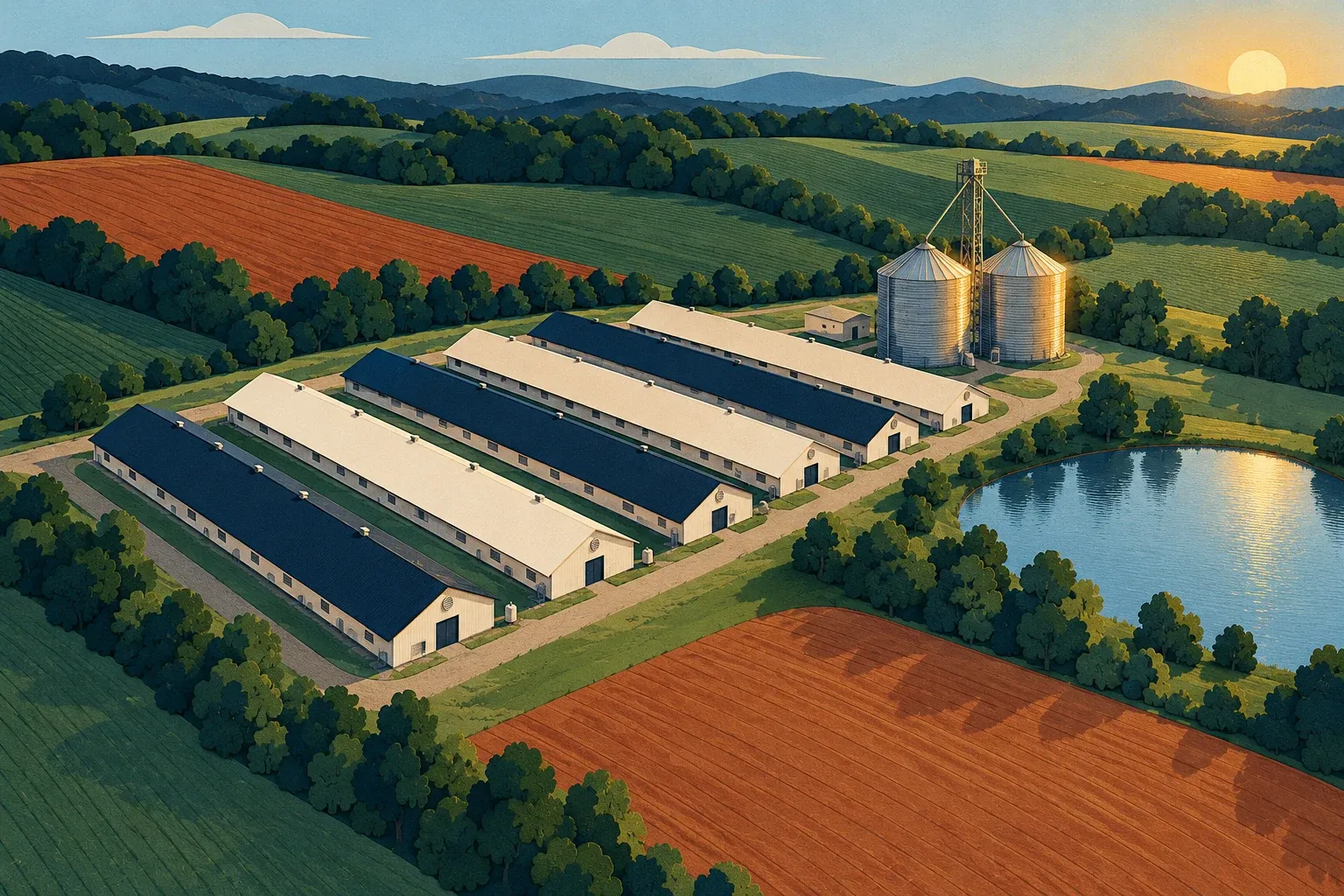
Poultry houses run their fans hardest when the sun is strongest. On a farm, timing is the hidden subsidy.
Farm solar in Kentucky works best when the panels produce while the farm is working. That’s why poultry operations are often the strongest candidates. Tunnel-ventilated broiler houses run their biggest fans on hot summer afternoons, right when solar output peaks. On a farm, that timing does more for the payback than a discount on panels.
Other loads don’t line up as neatly, so we map each one against expected production. The savings estimate should reflect your farm, not an average one. We’re fee-only and independent. We don’t sell panels, we don’t install, and no developer or installer pays us anything.
Grain drying is a big energy bill, but most of it is heat from propane or natural gas. Panels can offset the electricity for fans, augers, and controls, not the burner fuel. Fall drying also lands as days shorten and solar output drops. If a proposal counts the whole drying bill as savings, it’s wrong.
The same array can earn different credits depending on who serves the meter:
| Provider type | Examples | What to know |
|---|---|---|
| EKPC member co-ops | Blue Grass Energy, Farmers RECC, South Kentucky RECC | PSC-regulated; net metering terms can differ by co-op |
| Big Rivers member co-ops | Kenergy, Jackson Purchase Energy, Meade County RECC | PSC-regulated; each has its own tariff |
| TVA-served co-ops | Pennyrile RECC, Warren RECC, West Kentucky RECC | Outside Kentucky’s net metering statute; TVA and co-op policies apply |
| Investor-owned utilities | KU, LG&E, Kentucky Power, Duke Energy Kentucky | PSC-set export credits below retail for new customers |
Two more rules matter on farms. Kentucky’s statute covers net-metered systems up to 45 kW, and bill credits can’t move between premises. If the poultry houses, the shop, and the house are on separate meters, put the panels where the load is. Wes Caudill, our rural and agricultural advisor, starts every farm engagement by listing each meter and who serves it.
Developers of utility-scale solar offer multi-decade land leases with rent escalators, crop-loss payments, and decommissioning promises. Merchant projects of 10 MW or more need a construction certificate from the Kentucky State Board on Electric Generation and Transmission Siting, and counties with planning and zoning can set their own setbacks and decommissioning rules. Our Land Lease Offer Review compares the commercial and financial terms and organizes questions for your attorney. We never interpret legal language or tell you to sign. Our list of 14 lease terms to compare is a good place to start.
USDA rewrote the Rural Energy for America Program in 2026. A final rule effective October 16, 2026 shifts REAP toward projects that are already built and documented, excludes ground-mounted solar on certified cropland, and excludes systems with components made in countries named as foreign adversaries. Treat any grant as uncertain until USDA Rural Development confirms eligibility and timing.
Read our guide to solar for poultry and grain operations, then book a fit call. A Commercial Feasibility Study tests on-farm solar against 12 months of bills for every meter.
What we hear most
Tunnel-ventilated poultry houses draw the most power on hot afternoons, a good match for solar. Grain drying is a fall load, and its heat usually comes from propane or natural gas.
Barns, houses, shops, and wells often sit on separate meters. Kentucky's statute doesn't let net metering credits move between premises, so panel placement matters.
An EKPC member co-op, a Big Rivers member co-op, and a TVA-served co-op can treat the same array differently. TVA distributors fall outside Kentucky's net metering statute.
Utility-scale developers offer multi-decade land leases with escalators, crop-loss terms, and decommissioning promises that need a side-by-side comparison.
USDA rewrote REAP in 2026. Don't build a plan around a grant until USDA Rural Development confirms eligibility and timing.
Recommended

Service
A commercial and financial comparison of utility-scale solar lease offers for Kentucky landowners, with organized questions for your attorney and tax adviser.
See the service
Service
An independent study of on-site solar for businesses and public bodies, built on interval data, your actual tariff and federal credit deadline scenarios.
See the service
Service
A 75-minute session and written summary that tells you whether your home or small building is ready for solar now, what to sort out first, and what to ask installers.
See the service
Service
Administrative coordination of utility interconnection and net-metering paperwork in Kentucky, tracked from the first application through the agreement, inspection, meter change and permission to operate.
See the service
Service
Assembly of HOA architectural review packets, local permit application packets and utility program, grant or loan paperwork, with a document log and a deadline calendar.
See the serviceFAQ
The program changed significantly in 2026. A rule effective October 16, 2026 moves REAP toward projects that are already built and documented, and it excludes ground-mounted solar on certified cropland and systems with components made in countries named as foreign adversaries. Check with USDA Rural Development before counting on a grant.
No. We compare the commercial and financial terms against each other and against your farm income, and we organize questions for your attorney. We never interpret legal language or recommend signing.
Partly. Panels can offset the electricity that runs fans, augers, and controls, but drying heat usually comes from propane or natural gas. Fall drying also happens as solar output is falling. We model both so the savings estimate isn't padded.
Kentucky's net metering statute doesn't apply to distributors whose power comes primarily from TVA. Terms for customer-owned generation come from TVA programs and your co-op's own policies, so we work from the co-op's current documents.
Related
Farms & Land
How fan loads, fall grain drying, co-op meters, demand charges and the 2026 REAP changes decide whether solar pays on a Kentucky poultry or grain farm.
Read more
Farms & Land
14 commercial terms to compare in a Kentucky solar farm lease offer, from rent and escalators to drainage tile and decommissioning, framed for your attorney.
Read more
Illustrative scenario
A poultry and grain family in Christian County holds a utility-scale lease offer for 180 acres and wonders about solar for its own barns. We compare the income streams and list the questions they took to their attorney and CPA.
Read moreNext step
Tell us what you are weighing. A free 20-minute fit call is enough to know whether we can help and what it would take.