651 Perimeter Drive, Suite 440 Lexington, KY 40517
Procurement Consulting
Buy solar the way you'd buy anything expensive: on your terms
Solar procurement consulting from a firm that takes nothing from vendors. We write the request, level the bids and organize the paperwork, so every installer and supplier is measured against the same tape.
Installer RFP & Bid Leveling runs 4–8 weeks, depending on the bid window. Equipment Sourcing & Documentation runs 2–6 weeks.Flat fee, in writingNo commissions, ever
The idea
Off-the-rack quotes fit nobody well. Good procurement is tailoring: the same measurements, applied to every vendor.
What solar procurement consulting actually does
Most solar buyers in Kentucky collect quotes the way they’d collect quotes for a new roof. A few companies come out, each one measures differently, and you’re left comparing documents that were never built to be compared. Solar procurement consulting fixes the order of operations. You decide what you need first. Then every installer or supplier answers the same request, in the same format, under the same rules.
That’s the whole idea. A good quote isn’t a lucky find. It’s the product of a good request.
We work for the buyer only. We don’t sell panels, we don’t install, and no bidder pays us. Our independence pledge spells out what that means in practice.
The questions procurement answers
What are we actually buying? System size in DC and AC, equipment tier, storage or not, monitoring, and who maintains it.
From whom? Licensed, insured companies with the capacity to finish the job and the staying power to honor a warranty.
On what terms? Payment schedule, change-order rules, exclusions and warranty coverage, laid side by side.
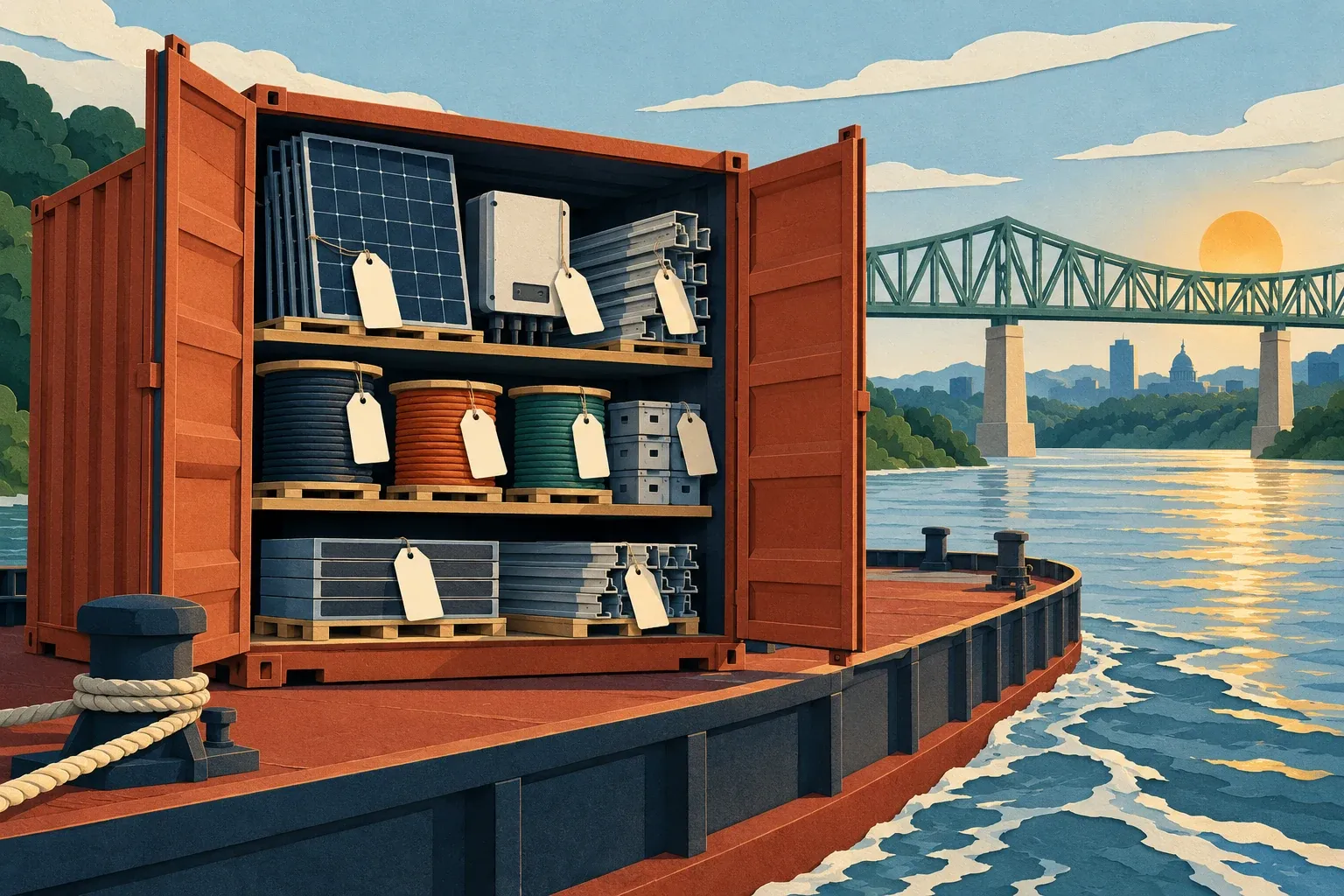
With what paper trail? For commercial projects, the supplier and country-of-origin documents a tax adviser will ask for.
Why procurement matters in Kentucky in 2026
Four things changed the math this year.
Deadlines got real. Under the 2025 federal budget law, solar projects that didn’t begin construction by July 4, 2026 must be placed in service by December 31, 2027 to claim the commercial clean electricity credits. A bid process that drifts for four months can now cost more than any price difference between bidders. Our credit deadline timeline walks through the sequence. Confirm your own project’s position with your tax adviser.
Where equipment comes from became a line item. For projects beginning construction after 2025, the “prohibited foreign entity” rules look at how much of a project’s equipment cost traces to restricted suppliers. Trade measures keep moving prices too: final antidumping and countervailing duty determinations on solar cells from India, Indonesia and Laos in September 2026, and a Section 232 action on polysilicon and its derivatives that takes effect December 4, 2026. Quotes expire faster than they used to.
Bigger isn’t automatically better. New net-metering customers of LG&E and KU are credited for exported energy at a rate set by the Public Service Commission that is below the retail rate. Kentucky Power and Duke Energy Kentucky have also moved new customers to lower export credits. A bid that oversizes the system to export more is selling you its least valuable kilowatt-hours. Your request should state the sizing goal so every bidder designs to it.
Warranties depend on survivors. Several large residential installers and financiers went bankrupt in 2024–2026. A 25-year workmanship warranty is a promise from a company, and part of procurement is asking whether that company will be around to keep it.
Two services, two different problems
Installer RFP & Bid Leveling is about choosing who builds your project. We write the request from your requirements, invite installers, run a shared Q&A and turn differently formatted bids into one comparison: price per watt DC, equipment, warranties, production assumptions, exclusions and payment terms. It ends with a scored shortlist and finalist interviews.
Equipment Sourcing & Documentation is about the components and their paperwork. It fits buyers who purchase major equipment directly, or who need a clean file of manufacturer and country-of-origin documents no matter who installs. We research suppliers, compare specifications and commercial offers, track lead times and keep the documentation log.
Many commercial projects use both. A homeowner holding two straightforward quotes usually needs neither; a Proposal Second Opinion is faster and simpler.
A question worth asking any comparison service
If a quote-comparison service is free to you, ask who pays for it. Many are paid by installers, per lead or per signed contract. That isn’t a scandal, but it is a reason their shortlist may not be yours. Our fee is flat, quoted in writing after a free fit call, and it is the only money we receive.
Lucía Brandt leads our procurement work. Her working rule: the most valuable line in any bid is the one that isn’t there.
In this practice
2 ways we can help
4–8 weeks from complete documents, depending mostly on the length of the bid window
We write an RFP from your requirements, invite installers you choose or we research, run the Q&A and level every bid into one scored comparison and shortlist.
Explore Installer RFP & Bid Leveling
2–6 weeks, depending on the number of components and how quickly suppliers respond
Supplier research, spec and quote comparisons, lead-time tracking and an organized file of manufacturer and country-of-origin documents for commercial solar and storage buyers.
Explore Equipment Sourcing & Documentation
What you walk away with
Outcomes, not opinions
01
Comparable bids
Every bidder prices the same scope in the same format, so the differences you see are real differences.
02
A documented decision
A scoring matrix and memo show who was invited, what each one offered and why the shortlist looks the way it does.
03
Paperwork in order
Supplier and origin documents are requested early, logged by component and handed to your tax adviser in one organized file.
04
No hidden incentives
We take no fees, commissions or margins from installers, manufacturers or distributors, so our only interest is the fit for you.
How it works
The process, start to finish
Installer RFP & Bid Leveling runs 4–8 weeks, depending on the bid window. Equipment Sourcing & Documentation runs 2–6 weeks.. You'll know the scope and the fee before any work begins.
Fit call
A free 20-minute call to learn the project, say honestly whether we can help and list the documents we'll need.
Written scope and flat fee
You receive the scope, deliverables, timeline and a fixed fee in writing before any work starts.
Requirements and outreach
We turn your goals into a request package, invite the installers or suppliers you choose or we research, and run the Q&A.
Leveling and scoring
We normalize every response, score it against weights you approved in advance and flag what is missing.
Report and walkthrough
You get the comparison, the memo and a recorded walkthrough call. One round of follow-up questions is included.
Deliverables
What's in the report
Written requirements summary built from your goals, site facts and budget
RFP package or request-for-quotation package, depending on the engagement
Bidder Q&A log shared with every participant
Bid-leveling workbook with normalized price, warranty and production comparisons
Scoring matrix with weights agreed before bids are opened
Documentation log for manufacturer and country-of-origin paperwork
Plain-English recommendation memo, assumptions page and recorded walkthrough call
Where our work stops
Boundaries we keep
We don't design systems, size equipment for code compliance or do any engineering; your installer and licensed designers handle that.
We don't draft, negotiate or interpret contract language; we flag commercial terms for your attorney.
We don't give tax advice or decide credit eligibility; your tax adviser does.
We don't buy equipment, take title to it or earn any margin on it.
No. We accept no fees, commissions, referral payments or margins from bidders, manufacturers, distributors or lenders. You pay a flat fee quoted in writing, and that is the only money we receive for the project.
Can you get us a lower price?
We can't promise a number. We can make bidders compete on the same scope, strip out the padding that hides in vague line items and show you where each price comes from. That usually makes negotiation easier, and the negotiation itself stays yours.
Do we have to use installers you find?
No. You can invite installers you already know, ask us to research licensed companies that serve your area, or both. Every bidder gets the same package and the same answers.
Is a formal procurement worth it for a small project?
Sometimes not. For a single home with two clear quotes, a Proposal Second Opinion is usually the better fit, and we'll tell you so on the fit call.
An independent study of on-site solar for businesses and public bodies, built on interval data, your actual tariff and federal credit deadline scenarios.
A planning timeline for Kentucky businesses facing the 48E and 45Y solar deadlines: the July 4, 2026 start date, the 2027 cutoff, FEOC limits and lead times.
Answer 22 yes-or-no questions about your solar proposal. The checklist flags the answers that deserve a hard look and gives you the exact question to put to the installer, in writing.
Read more
Next step
Get an answer before you sign anything.
Tell us what you are weighing. A free 20-minute fit call is enough to know whether we can help and what it would take.