The commercial solar tax credit deadline that matters now is December 31, 2027. Under the 2025 budget law, the Section 48E investment credit and the Section 45Y production credit end for wind and solar facilities placed in service after that date. Facilities that began construction by July 4, 2026 are exempt. That earlier window has closed. A Kentucky business that hadn’t started by then has, as of November 1, 2026, 425 days to finish.
That’s tight but not impossible for a small or mid-size project with a ready site, a clear interconnection path and fast decisions. It is unforgiving, though. The law doesn’t extend the date for storms, supply delays or a slow utility study. What follows is the planning timeline we’d use, and the questions to put to your tax adviser at each step.
As of November 1, 2026: the July 4, 2026 and December 31, 2027 dates come from the statute itself. Treasury’s guidance on what counts as beginning construction, issued in August 2025 as IRS Notice 2025-42, has been the subject of litigation and change, and Treasury has said more guidance on foreign-entity rules is coming. This is general information, not tax advice. Confirm every date and definition with your tax adviser.
The rules in one table
| Question | Current rule |
|---|---|
| Which credits? | Section 48E (investment) and Section 45Y (production), for facilities placed in service after 2024 |
| The cutoff | No credit for wind and solar facilities placed in service after December 31, 2027 |
| The exemption | Facilities whose construction began on or before July 4, 2026 aren’t subject to that cutoff |
| Proving construction began | Set by Treasury guidance, not the statute. IRS Notice 2025-42 (August 2025) narrowed the tests, emphasizing physical work of a significant nature and limiting the older 5% cost safe harbor. That guidance has been litigated and may have changed; confirm the current test with your adviser. |
| Staying exempt | Prior guidance has required a continuous program of construction, with a safe harbor tied to finishing within a set number of years. Confirm the current version. |
| Foreign-entity limits | Facilities and storage that begin construction after December 31, 2025 can’t include material assistance from a prohibited foreign entity above set thresholds |
| Credit rate | 6% base. 30% if the facility is under 1 MW AC or meets prevailing wage and apprenticeship rules. Bonus credits may add more if you qualify. |
| Storage | Exempt from the 2027 wind and solar cutoff, with its own phase-down |
Where your project stands now
You started work before July 5, 2026
You may be exempt from the 2027 cutoff, provided the work you did counts as beginning construction under the rules that apply to your project, and you keep going. Because Treasury’s guidance on that question has been contested, don’t assume. Your job now is the evidence file: binding contracts signed before the work began, invoices, dated photos and a record showing construction continued. Ask your adviser two specific questions: which beginning-of-construction test applies to your facility, and by what date it must be placed in service to stay within the continuity rules.
You haven’t started
You’re on the 2027 path. Two clocks now run at once: the placed-in-service deadline and the foreign-entity thresholds for your construction start year. A solar facility that begins construction in 2027 must show that at least 45% of its qualifying cost comes from non-prohibited sources. For energy storage, the 2027 threshold is 60%. The interim safe harbors in Notice 2026-15 lean on supplier certifications and published cost tables. Build those documents into your bid requirements, not your tax season.
You’re adding storage, or building storage alone
Energy storage isn’t subject to the 2027 cutoff. Its credit runs at full value for projects that begin construction through 2033, drops to 75% for 2034 and 50% for 2035, and ends after that. The foreign-entity thresholds for storage start higher, at 55% for 2026, and rise five points a year.
A timeline for a project that hasn’t started
Commercial solar deadlines are bridges built from both ends: paperwork from one side, procurement from the other. They have to meet in the middle, by a date that doesn’t move. Here’s a schedule for a rooftop or ground-mount project of a few hundred kilowatts. Larger projects, or anything needing grid upgrades, need more room than this.
| Window | Paperwork side | Procurement and build side |
|---|---|---|
| November–December 2026 | Engage your tax adviser on 48E vs. 45Y, rate eligibility, bonus credits and how you’ll monetize the credit. Run a feasibility study on your load data. | Ask your utility, in writing, about interconnection steps, study timelines and the tariff a system your size would take. Order assessments of roof or site from licensed professionals. |
| January–February 2027 | File the interconnection application. Start permit applications. | Issue an RFP that requires equipment origin documentation and supplier certifications. Level the bids on scope, schedule and warranties. |
| March–April 2027 | Confirm the foreign-entity documentation path. If 1 MW AC or larger, set up wage and apprenticeship compliance. | Sign the construction contract with schedule protections. Order long-lead equipment, such as inverters, transformers and switchgear. |
| May–August 2027 | Track interconnection approval and permit inspections. | Construction. |
| September–October 2027 | Assemble the placed-in-service evidence your adviser specifies. | Mechanical completion, inspections, utility meter and permission to operate. |
| November–December 2027 | Final documentation. | Buffer. Treat it as a buffer for delays, not working time. |
If you can’t see a credible path to the September–October milestones by early spring, decide then whether the project still makes sense without the credit, rather than in December 2027.
A worked example: what a slipped month can cost
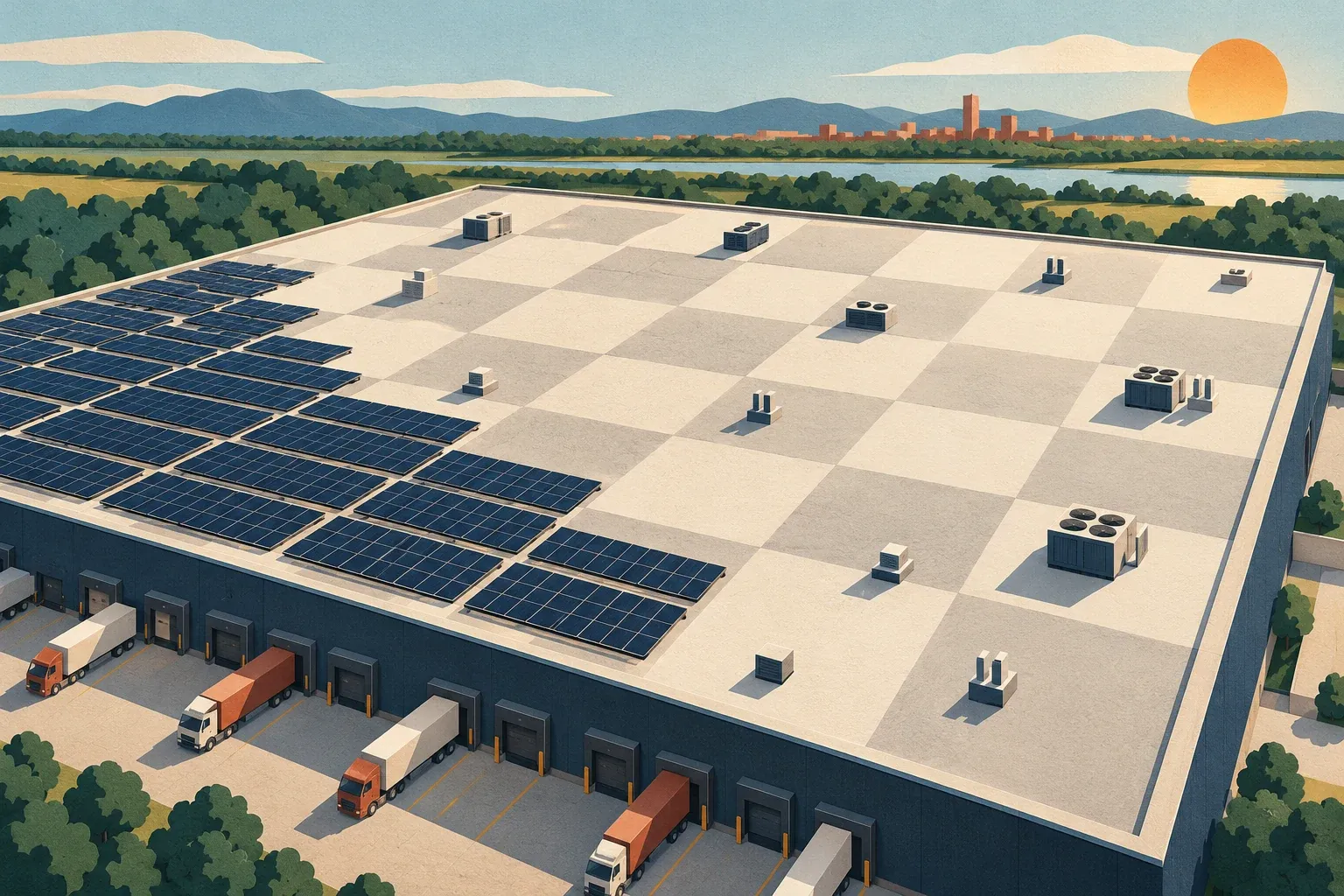
Picture an illustrative Scott County manufacturer planning 400 kW AC (about 520 kW DC) of rooftop solar at $1.90 per DC watt, or $988,000. At under 1 MW AC, the project qualifies for the 30% rate without the wage and apprenticeship requirements, assuming everything else checks out.
| Placed in service | Credit at 30% | Credit at 6% (if the 30% rate failed) |
|---|---|---|
| December 2027 | $296,400 | $59,280 |
| January 2028 | $0 | $0 |
The difference between finishing on December 28 and January 4 is the entire credit. That asymmetry is why the buffer in the timeline above isn’t optional. It’s also why a project that only works with the credit deserves a hard look at whether it can really finish in time.
Kentucky-specific lead times to ask about
- Interconnection: Kentucky’s net metering statute covers systems of 45 kW or less. Larger commercial systems go through the utility’s other interconnection and generator tariffs, with their own forms, studies and timelines. Ask your utility for its current process and typical study durations in writing. Our interconnection paperwork coordination keeps that file moving.
- Local permits: Building and electrical permits, and zoning approval for ground mounts, vary by county and city. Ask the local office about review times before you lock a construction start.
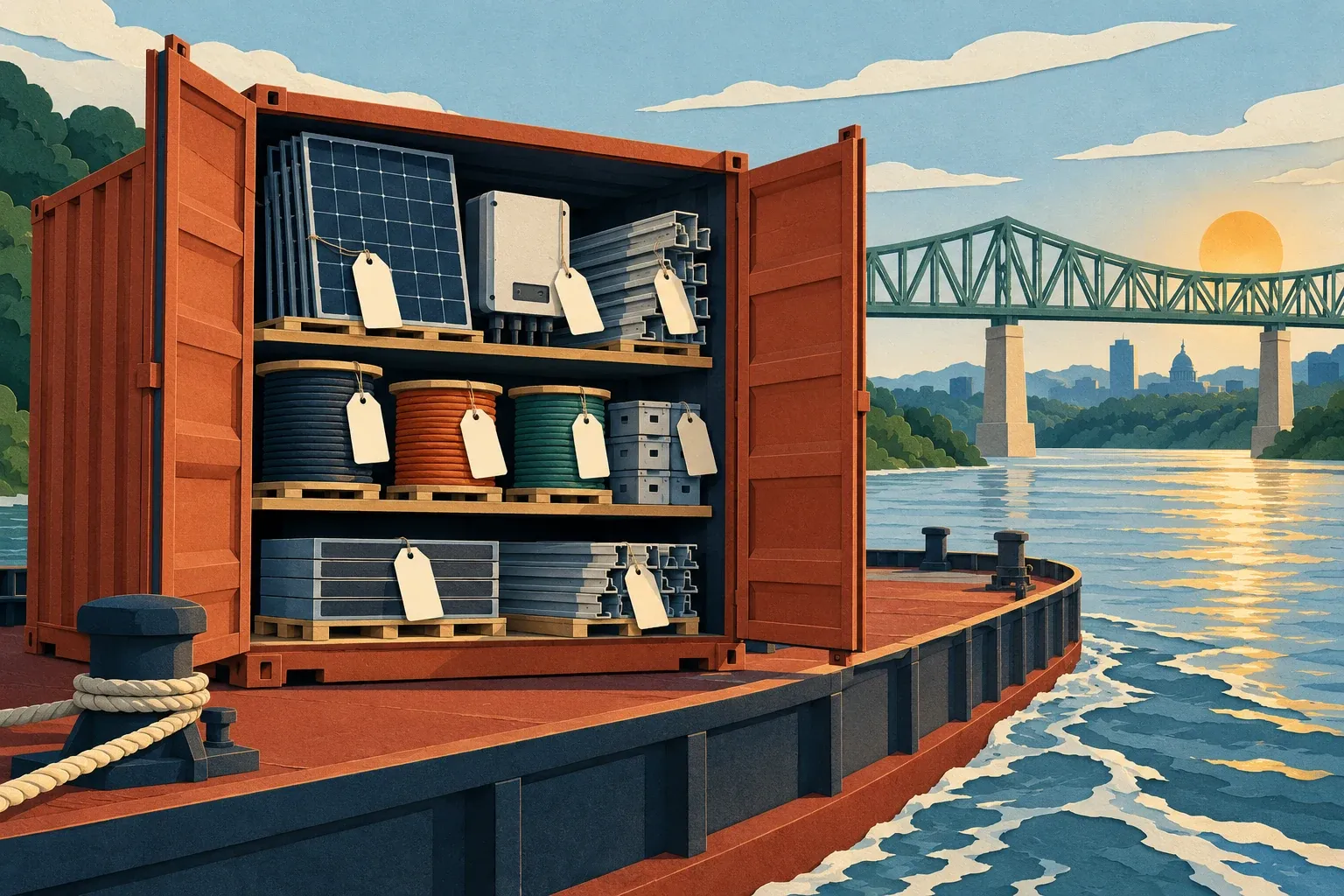
- Equipment: Lead times for inverters, transformers and switchgear can stretch for months. Get delivery commitments in the contract, not a sales email.
- Foreign-entity documentation: Ask every bidder now what supplier certifications and cost data they can provide. Our Equipment Sourcing & Documentation service builds that file with you.
Questions to bring to your tax adviser
Your adviser’s time is expensive, so arrive with specific questions:
- Does our project qualify under Section 48E or 45Y, and which is worth more given our expected production and tax position?
- What exactly must happen by December 31, 2027 for the facility to count as placed in service, and what documents prove it?
- If any work began before July 5, 2026, does it count as beginning construction under the guidance that applies to us today?
- Will we use the credit ourselves, transfer it to a buyer, or claim it through elective pay? What does each require, and when?
- Which bonus credits might we qualify for, and what evidence would each one need?
- How do the foreign-entity rules apply to our equipment list, and which supplier certifications should we require in the contract?
Write down the answers and the date you got them. Guidance has changed more than once since July 2025, and a dated answer tells you when to ask again.
What else is still on the table
- Storage, on the longer schedule above.
- Efficiency and load shifting, which need no tax credit to pay back.
- Utility renewable options, which can meet a sustainability goal without building anything. Our green tariff vs. RECs vs. on-site solar comparison covers the trade-offs.
- USDA REAP, the Rural Energy for America Program, changed significantly in 2026. If you’re a rural small business or agricultural producer, check current terms directly with USDA Rural Development before counting on it.
What we’d do
- This week: book time with your tax adviser and bring this timeline. Ask which milestone counts as placed in service for your project.
- This month: send the utility a written interconnection inquiry and pull 12 months of interval data.
- By January: decide go or no-go on a feasibility study that models the project both with and without the credit.
- In the RFP: require foreign-entity documentation, firm delivery dates and schedule remedies.
- At every milestone: add the evidence to a single dated file.
Our Commercial Feasibility Study takes 3–5 weeks and models the project against the deadline, with and without the credit, so the decision is made in January rather than discovered in December. We’re fee-only and take nothing from installers or equipment makers. We don’t provide tax advice or legal advice. We prepare the questions and the numbers for your CPA and counsel to review.
Sources
- IRS Notice 2025-42, Beginning of construction requirements for wind and solar facilities (as issued August 2025; confirm current status)
- IRS Notice 2026-15, Interim guidance on prohibited foreign entity and material assistance rules
- 26 U.S. Code § 48E, Clean electricity investment credit
- 26 U.S. Code § 45Y, Clean electricity production credit
- 26 U.S. Code § 7701(a)(51)–(52), Prohibited foreign entity and material assistance definitions
- IRS, Elective pay and transferability frequently asked questions: overview
This article is general information, not legal, tax or investment advice. Programs, tariffs and laws change; confirm current terms with the source, your utility or a qualified professional.

Lucía runs our requests for proposals and turns stacks of differently formatted quotes into one comparable table. She tracks equipment availability, warranty terms and the paperwork trail that commercial buyers now need for every major component. She believes the most valuable line in any bid is the one that isn't there.