Steam isn't electricity
Cookers, stills, and boilers run mostly on fuel-fired steam. Solar panels make electricity, so they cut the fuel bill only if a thermal load is electrified.
Distilleries & hospitality
Distilling is applied energy, and most of it is heat. We sort out how much of your energy spend solar electricity can reach, which roof deserves the first array, and what you can truthfully tell visitors about it.
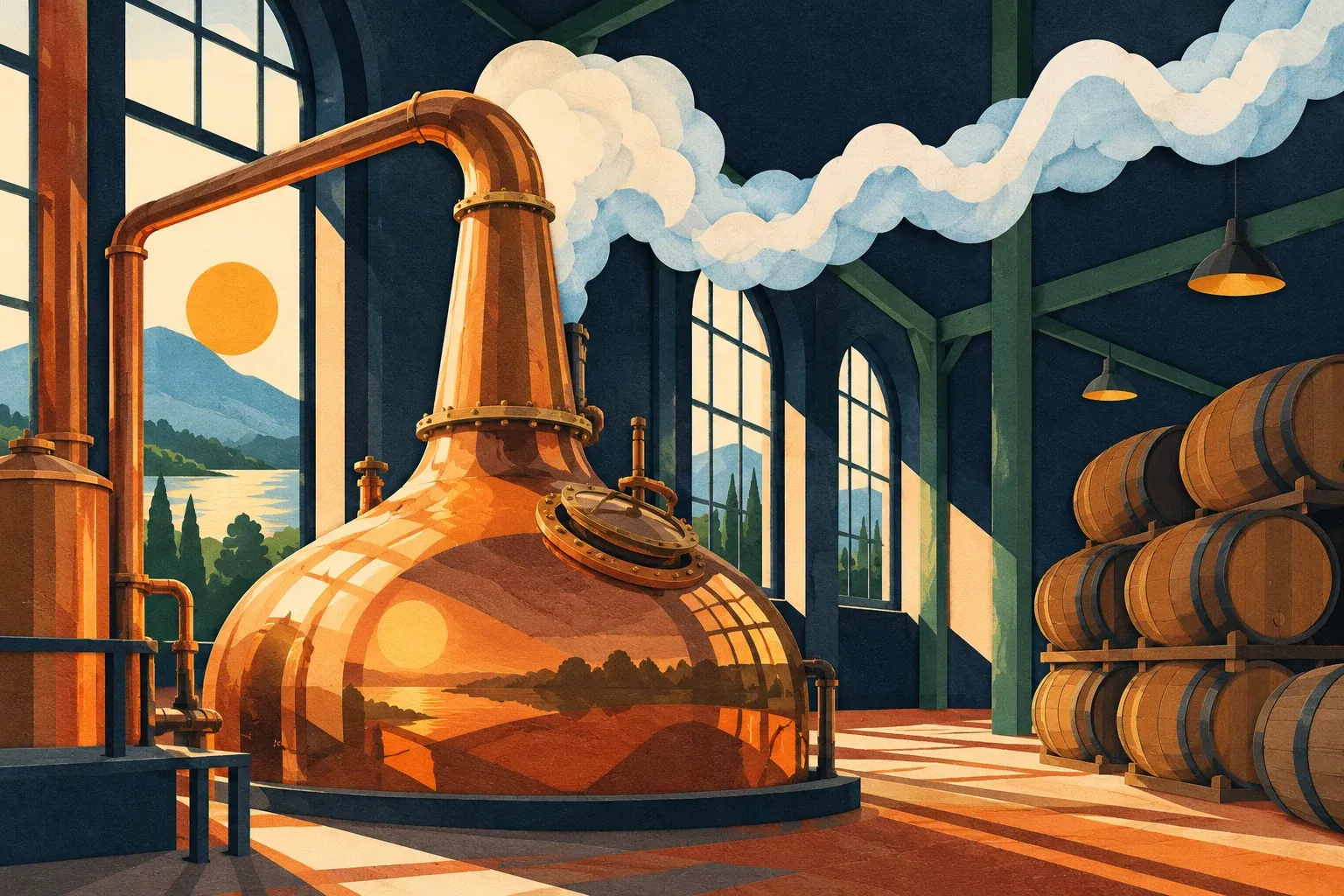
Distilling is applied energy. The question is how much of that heat and power could be homegrown.
Before anyone talks about panels, look at where your energy dollars go. In a typical distillery, the biggest share buys fuel for steam: cookers, stills, and boilers run on heat, usually from natural gas or propane. Distillery solar energy in Kentucky offsets electricity, the other share, so your electric bill sets its ceiling.
That isn’t a reason to skip solar. It’s a reason to size expectations correctly. Suppose 70% of a distillery’s energy spend buys fuel and 30% buys electricity. An array that covered every kilowatt-hour would still leave most of the energy budget untouched. A proposal that promises to cut that plant’s energy costs in half deserves a second look.
We’re fee-only and independent. We don’t sell panels or install them, and no vendor pays us.
Distilleries carry real electric loads, many of them in daylight: chillers and cooling-water pumps, grain handling, bottling lines, warehouse lighting, and the visitor center’s HVAC and kitchen. That’s where solar earns its keep. Electrifying heat with electric boilers or heat pumps is a larger, separate decision that changes the electric load and needs licensed professionals to evaluate. We can model the economics of both paths so the solar decision doesn’t lock out the bigger one.
Rickhouse roofs are long, visible, and tempting. They also cover barrels of aging spirit. Before treating one as a site, ask your insurer, your fire official, and a licensed structural engineer whether panels belong there. Often the bottling hall, a newer warehouse, the visitor center, or a parking canopy makes the easier first project. We compare the candidates side by side on cost, output, and risk.
Visitors, distributors, and lenders increasingly ask about energy and emissions. If the renewable energy certificates are sold, or a third-party owner keeps them, the honest claim changes from “we use solar power” to “we host a solar array.” The FTC’s Green Guides are the federal reference point for environmental marketing; your attorney should review the final wording.
We prepare non-certified Scope 2 estimates using published methodologies, track who holds the certificates, and give you sentences you can defend. In LG&E and KU territory, we also compare on-site solar with the Green Tariff, which offers RECs, an on-site Business Solar option, and a Renewable Power Agreement for large customers.
Hotels, inns, restaurants, and event venues share these questions with different timing. Guest traffic peaks on weekends and in tourist seasons, and kitchens and HVAC run well into the evening. We line up your calendar with expected production before anyone sizes an array.
Most clients begin with a Commercial Feasibility Study and, when public claims matter, Carbon & Scope 2 Reporting. Weighing a tariff program against your own array? Read green tariff vs. RECs vs. on-site solar.
What we hear most
Cookers, stills, and boilers run mostly on fuel-fired steam. Solar panels make electricity, so they cut the fuel bill only if a thermal load is electrified.
Rickhouse roofs are long and visible, but barrel warehouses raise fire-safety and insurance questions. A bottling hall or visitor center may be the better first roof.
A sign that says the bourbon is solar-powered invites questions. If the RECs are sold, or a third party keeps them, the honest wording changes.
Tasting rooms, hotels, and event spaces peak on weekends and in tourist seasons, while production follows its own calendar. The two load shapes rarely match.
Recommended

Service
An independent study of on-site solar for businesses and public bodies, built on interval data, your actual tariff and federal credit deadline scenarios.
See the service
Service
An annual, non-certified estimate of emissions from purchased electricity using the GHG Protocol Scope 2 Guidance and EPA eGRID factors, with location-based and market-based results and a methods memo.
See the service
Service area of practice
Renewable-energy adoption research, electricity emissions estimates using published methodologies, renewable usage tracking and voluntary sustainability reporting, all non-certified and plainly explained.
See the service
Service
We write an RFP from your requirements, invite installers you choose or we research, run the Q&A and level every bid into one scored comparison and shortlist.
See the service
Service
Help for Kentucky suppliers answering customer sustainability questionnaires and portal requests: a repeatable energy and emissions data file, consistent narrative answers and renewable option evaluation.
See the serviceFAQ
Not directly. Most stills, cookers, and boilers use steam from fuel-fired boilers. Solar can offset electric loads such as chillers, pumps, grain handling, bottling, and HVAC. Electrifying heat is a separate, larger decision that licensed professionals need to evaluate.
Sometimes, but treat it as a question for your insurer, your fire official, and a licensed structural engineer before you treat it as a site. We include those questions in our report and compare the alternatives on cost and output.
Say what the numbers support. We estimate the share of your electricity the system supplies and track who holds the RECs. The FTC's Green Guides are the federal reference for environmental marketing claims; your attorney should review the final wording.
Yes. Hotels, inns, restaurants, and event venues face similar questions about daytime loads, seasonal traffic, and guest-facing claims. The analysis starts the same way: your bills and your calendar.
Related

Business & Sustainability
What LG&E and KU's Green Tariff, unbundled RECs and onsite solar cost, how much control each gives, and what a Kentucky business can claim for Scope 2.
Read more
Business & Sustainability
Location-based vs market-based Scope 2, explained for Kentucky: what each method measures, which eGRID factors apply, and why RECs move only one number.
Read more
Resource
Every solar feasibility report example below is illustrative, with hypothetical numbers, but the structure is exactly what our clients get: assumptions first, the answer in plain English, and the questions to take to your licensed professionals.
Read moreNext step
Tell us what you are weighing. A free 20-minute fit call is enough to know whether we can help and what it would take.